The global demand for high-performance winter apparel has evolved beyond simple warmth, shifting toward technical precision and versatility. In the modern outdoor market, the ability to provide gear that withstands extreme alpine conditions while maintaining breathability is a critical competitive advantage for brands. This is why understanding the technical specifications of professional-grade winter gear is essential for wholesalers and designers aiming to capture the premium ski and snowboard segment.
For B2B buyers and apparel distributors, sourcing products that balance durability with mobility is a constant challenge. The transition from standard polyester to high-density ripstop fabrics and the implementation of waterproof membranes are not just upgrades—they are necessities for survival and performance in wet winter environments. Ensuring that garments can handle both heavy precipitation and high-energy activity is the hallmark of professional-grade manufacturing.
When seeking the right manufacturing partner, brands often look for options similar to customizable soft shell jackets to ensure their product line meets specific regional climate needs. While the focus for alpine performance often lands on waterproof snow pants, the core principles of weatherproofing and thermal regulation remain consistent across the entire winter apparel ecosystem.

The Technical Foundation of Waterproof Protection
At the heart of professional winter performance is the waterproof membrane. For high-end snow pants, a 10,000mm waterproof rating represents a significant barrier against moisture, allowing the wearer to remain dry even when kneeling in deep snow or facing heavy sleet. This technical specification is complemented by fully taped seams, which eliminate the common failure points where water typically seeps through stitched holes.
The synergy between the outer ripstop polyester and the internal membrane ensures that the garment does not just repel water but resists the hydrostatic pressure of wet alpine environments. This level of protection is what separates professional gear from consumer-grade apparel, providing an impenetrable shield that is essential for extended excursions.
Adaptive Mobility and Ergonomic Design
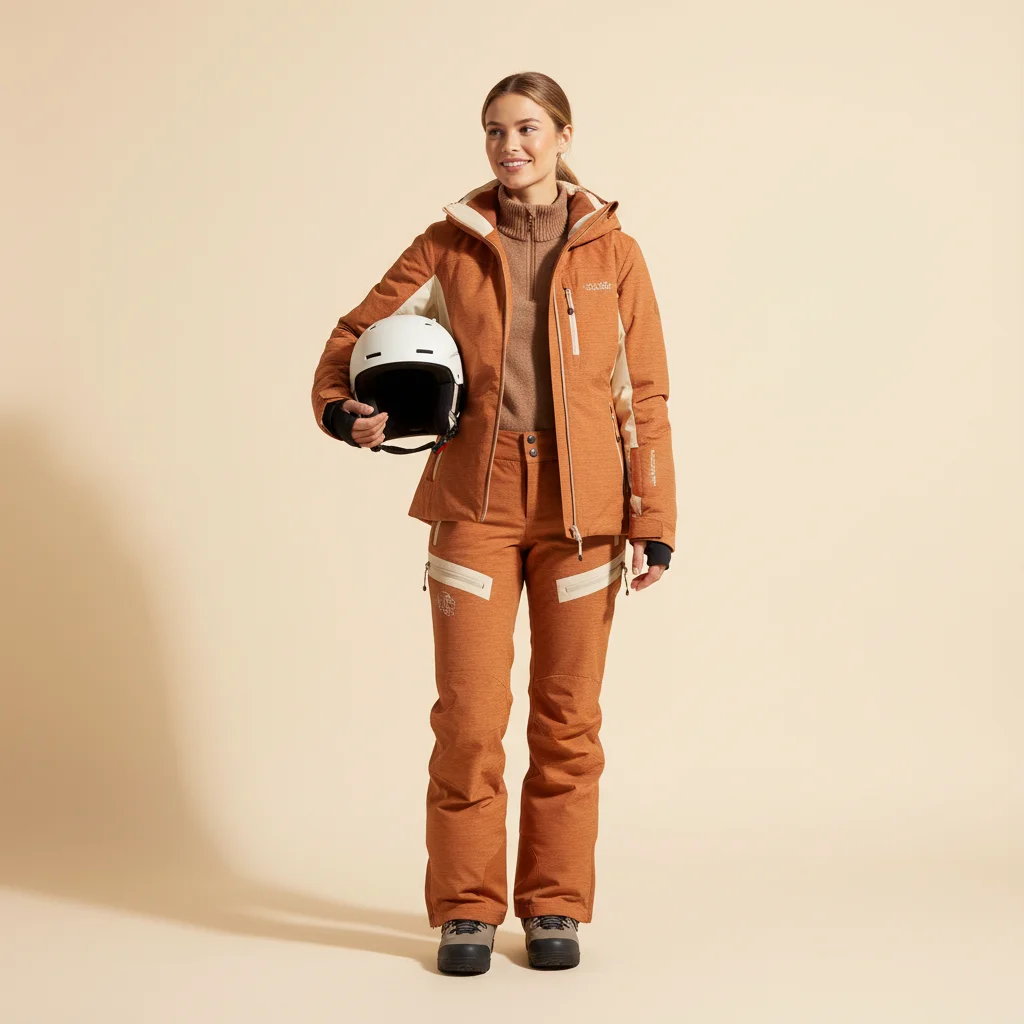
True alpine performance requires a design that moves with the body. The implementation of articulated knees is a critical ergonomic feature, as it pre-shapes the garment to follow the natural bend of the leg. This reduces fabric tension during aggressive carving or jumping, ensuring that the wearer is not fighting against their own clothing while navigating steep slopes.
Beyond the knee articulation, the athletic cut is engineered to provide a streamlined silhouette that reduces wind drag without sacrificing internal space for base layers. This balance of fit and function is what allows professional skiers and snowboarders to maintain peak agility and precision in their movements.
By focusing on the physiological needs of the athlete, the design minimizes fatigue and maximizes comfort. When a garment is engineered for mobility, it directly impacts the user's safety and performance, reducing the risk of restricted movement during critical maneuvers.
Thermal Regulation in Extreme Alpine Climates
Managing core temperature is as important as blocking the cold. While heavy insulation is necessary for warmth, overheating during high-energy activity can lead to sweat buildup, which eventually freezes and chills the body. This is why advanced gear often incorporates features found in customizable soft shell jackets, such as strategic ventilation.
The integration of side ventilation zippers allows for rapid heat release, enabling the wearer to manually regulate their internal climate. By venting excess steam and heat, the 5,000g/24h breathability rating is enhanced, ensuring that the skin remains dry and the body stays within an optimal thermal window.
This dual-action approach—blocking external cold with a windproof shell while allowing internal heat to escape—is the gold standard for thermal regulation. Whether in a high-intensity run or a relaxed après-ski setting, these mechanisms ensure a consistent and comfortable experience.
Durability Metrics for Professional Winter Gear
Durability in the mountains is measured by a garment's ability to withstand abrasion from ski edges, ice, and rough terrain. The use of high-density ripstop polyester is a strategic choice, as the reinforced grid pattern prevents small punctures from evolving into large tears. This is further bolstered by reinforced scuff guards at high-wear areas.
When analyzing the longevity of professional gear, the material strength must be matched by the construction quality. Taped seams and heavy-duty zipper closures ensure that the structural integrity of the pants remains intact through seasons of rigorous use, providing a reliable investment for the end-user.
Performance Ratings for Professional Winter Apparel
Strategic Storage and Weatherproof Seals
Functional utility is defined by the ability to secure essentials without compromising the garment's waterproof integrity. The inclusion of waterproof zippered thigh pockets provides secure storage for valuables, while storm flaps on the zip fly serve as a critical secondary barrier against wind and snow infiltration.
One of the most vital components for alpine gear is the boot gaiter. Featuring gripper elastic, these gaiters seal tightly around the ski boot, creating a physical barrier that prevents snow from entering the pants from the bottom. This prevents the "internal soak" that often occurs during deep powder runs.
B2B Supply Chain and Production Logistics
For large-scale apparel brands, the transition from design to delivery requires a rigorous quality control pipeline. A streamlined order management process ensures that every step, from the initial PP sample confirmation to the final delivery of 1,000+ pieces, is tracked and validated. This reduces the risk of material inconsistencies across different size ranges from XS to 3XL.
Production control focuses heavily on the most vulnerable points of the garment: the taped seams and the membrane application. During the 60-120 day lead time, iterative quality checks are performed to ensure that the 10,000mm waterproof rating is consistent across the entire batch, adhering to international textile standards.
Rapid prototyping is essential for design validation. A logistics system that delivers custom samples within 7-15 days allows brands to refine their specifications and branding integrations before committing to full-scale production, ensuring the final product meets the exact market requirements.
Investment Return and Performance Comparison
When comparing premium technical gear to standard offerings, the value proposition becomes clear through a data-driven analysis of performance metrics. Standard snow pants often rely on basic polyester with limited waterproof ratings, whereas professional-grade pants utilize a superior 10,000mm membrane and ripstop fabrics to extend the product's lifecycle.
The long-term ROI for a brand lies in reducing return rates and increasing customer loyalty. By offering garments with articulated knees and fully taped seams, brands provide a tangible performance upgrade that users can feel immediately, justifying a premium price point.
Ultimately, the choice of materials and construction methods dictates the market positioning of the product. Investing in higher technical specifications ensures that the apparel remains relevant in a competitive global market where performance and reliability are the primary drivers of purchase.
Technical Comparison: Standard vs. Premium Alpine Pants
| Feature Metric | Standard Snow Pants | Our Premium Pants | Performance Impact |
|---|
| Waterproof Rating | 5,000mm | 10,000mm | Superior Moisture Block |
| Fabric Type | Standard Polyester | Ripstop Polyester | Enhanced Tear Resistance |
| Seam Protection | Stitched Only | Fully Taped Seams | Zero Seepage Leakage |
| Breathability | Low/Medium | 5,000g/24h | High Heat Dissipation |
| Knee Design | Straight Cut | Articulated Knees | Unrestricted Motion |
| Boot Seal | Basic Cuff | Gripper Elastic Gaiters | Full Snow Barrier |
FAQS
A 10,000mm rating indicates that the fabric can withstand a column of water 10,000mm high before leaking. In practical terms, this means the pants are highly effective against heavy snow and rain, ensuring the wearer remains dry even during intense winter sports or prolonged exposure to wet alpine conditions.
Articulated knees are pre-shaped to follow the natural bend of the human leg. This design reduces fabric tension when bending, which prevents the pants from pulling or restricting movement. For the athlete, this means a full range of motion and better control while carving through powder.
They are engineered for both. While the 10,000mm rating handles moisture, the high-density windproof polyester shell and storm flaps prevent cold air from infiltrating the garment. This combined approach keeps the wearer warm by blocking wind chill and preventing moisture-induced cooling.
Ventilation zippers allow the user to manually release excess body heat during high-energy activities. By opening these zips, sweat can evaporate more quickly, preventing the build-up of moisture inside the pants, which is critical for maintaining a comfortable core temperature in freezing weather.
Yes. For orders meeting the MOQ of 1,000 pieces per color, we offer comprehensive customization. This includes specific design modifications, color matching, and branding integrations, all of which are validated during the PP sample stage before mass production begins.
The boot gaiters feature a gripper elastic band that seals tightly around the ski or snowboard boot. This creates a physical, snug barrier that blocks snow and slush from entering the pants from the bottom, keeping the inner layers dry regardless of the snow depth.
Conclusion
The integration of 10,000mm waterproof membranes, ripstop polyester, and ergonomic features like articulated knees transforms standard winter wear into professional-grade performance gear. By focusing on the critical intersection of durability, mobility, and thermal regulation, brands can provide users with an unparalleled alpine experience that ensures both safety and comfort in the harshest environments.
As the outdoor apparel market continues to trend toward higher technical specifications, the ability to customize and scale production without sacrificing quality is the key to long-term success. We invite you to explore how our manufacturing expertise can elevate your winter apparel line. Visit our website: www.outdoor-apparels.com