The transition toward high-performance adaptive outerwear has reshaped how corporate and outdoor brands approach protective layering, particularly with the rise of the custom soft shell vest. As climatic volatility increases, the demand for garments that balance thermal regulation with unrestricted mobility has moved from a niche athletic requirement to a primary B2B procurement priority.
The technical challenge lies in the "breathability-waterproof paradox"—creating a fabric that prevents external moisture penetration while allowing internal metabolic heat and vapor to escape. For procurement managers and brand designers, selecting the right material composition is no longer just about aesthetics, but about matching specific membrane technologies to the environmental stressors of the end-user.
This analysis explores the engineering logic behind modern softshell construction, evaluates the impact of 4-way stretch fabrics on wearer ergonomics, and provides a technical framework for sourcing high-durability vests. By understanding the interplay between bonded fabric weights and membrane permeability, buyers can optimize their product specifications for maximum field performance.


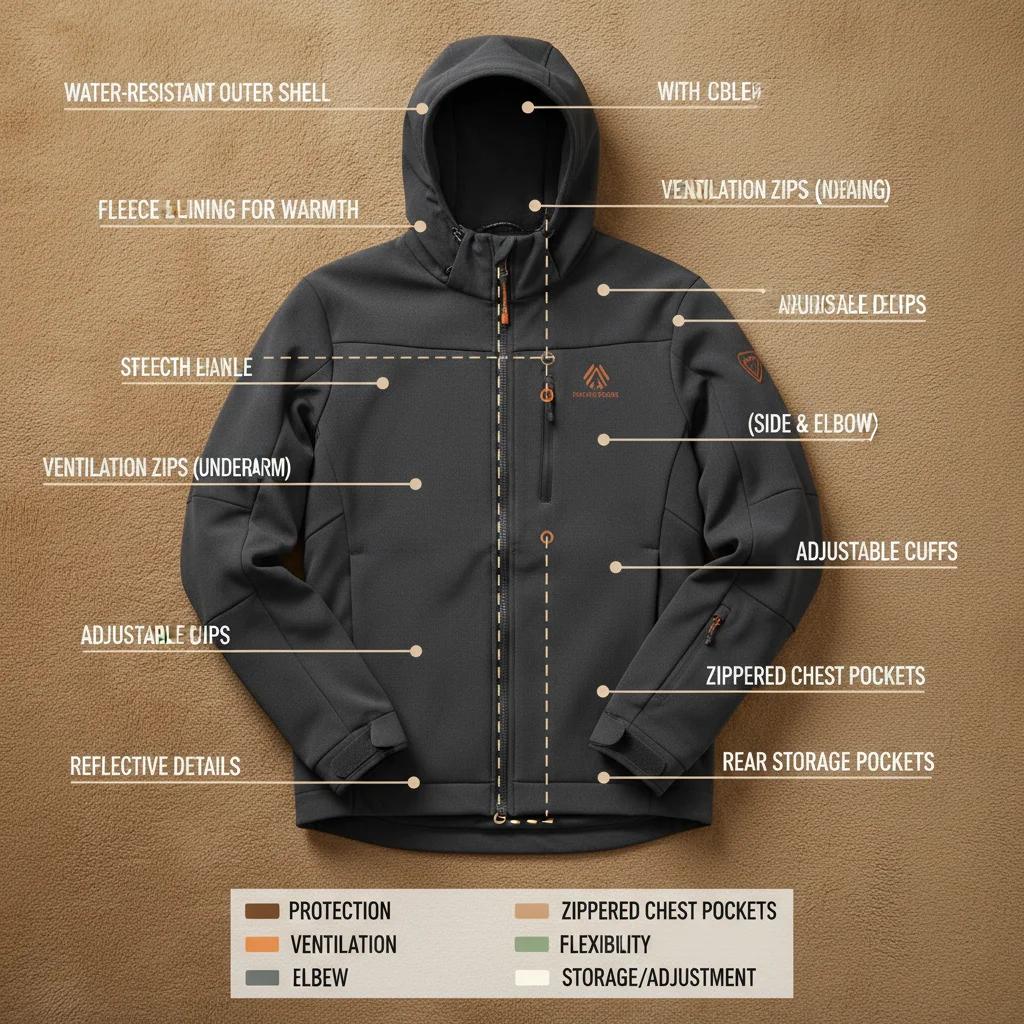
Modern softshell construction relies on a bonded multi-layer system. A typical high-performance configuration utilizes a bounded fabric of approximately 290g/m², where the outer face—comprising 94% polyester and 6% elastane—is fused with a 100% polyester micro-fleece inner lining. This fusion creates a composite material that provides structural integrity while maintaining a low profile.
The bonding process is critical; it ensures that the windproof membrane remains stable during repeated stretching and washing. By integrating the micro-fleece directly into the structure, the garment achieves immediate thermal retention without the bulk of traditional separate linings, which is essential for the streamlined fit of a professional vest.
When evaluating a custom soft shell vest, two primary metrics define its utility: the waterproof rating (measured in mm) and the breathability rating (measured in MVP - Moisture Vapor Permeability). A waterproof rating of 8000mm indicates a robust defense against moderate rain and wind, ensuring the fabric can withstand significant water pressure before leaking.
The breathability factor, often rated around 3000 MVP, refers to the capacity of the micro-porous membrane to transport humidity from the inside of the garment to the exterior. This is achieved through a semi-permeable layer that allows water vapor molecules to escape while blocking liquid water droplets from entering, which is vital for preventing "cling" during high-activity phases.
Beyond these ratings, the water-repellent coating (DWR) adds a first line of defense by causing water to bead and roll off the surface. This prevents the outer polyester face from becoming saturated, which would otherwise increase the garment's weight and drastically reduce its breathable efficiency by blocking the membrane's pores.
Traditional woven fabrics often restrict movement in the shoulder and thoracic regions, particularly in sleeveless designs. The integration of 4-way stretch fabric—utilizing a high percentage of elastane—allows the material to expand both horizontally and vertically, eliminating the restrictive "pull" experienced during reaching or climbing.
From an engineering perspective, the 6% elastane blend is a calculated balance. Too little elastane results in poor flexibility; too much can compromise the wind-blocking capabilities of the weave and the adhesion of the bonded fleece layer. This specific ratio ensures that the vest moves seamlessly with the body's dynamic kinetics.
Selecting the appropriate softshell involves a trade-off between absolute waterproofing and vapor transmission. In typical outdoor and corporate environments, a balanced approach is preferred over extreme ratings, as overly waterproofed garments often lead to internal condensation—the "sauna effect"—during moderate exertion.
The following assessment provides a normalized engineering rating of different softshell configurations, evaluating how they balance moisture management against wind resistance. This allows buyers to determine which configuration aligns with their specific operational climate.
The versatility of the custom soft shell vest makes it an ideal component for tiered layering systems. In professional field operations, such as site surveying or logistics management, the vest provides essential core warmth and wind protection while leaving the arms free for high-precision tasks, which is critical for maintaining dexterity in cold environments.
For corporate branding and unified uniforms, the OEM flexibility—including customizable logo placement and a wide range of color options—allows organizations to align their functional gear with brand DNA. This ensures that the garment serves as both a professional identifier and a genuine piece of protective equipment for employees operating in transitional weather conditions.
The industry is currently shifting toward "circular" softshell production. The traditional use of polyurethane (PU) and PVC coatings is being challenged by PFC-free water repellents and recycled polyester blends. This transition aims to maintain the 8000mm waterproof threshold while reducing the environmental footprint of the chemical finishing process.
Technological R&D is also focusing on "intelligent" membranes that can dynamically adjust their permeability based on the wearer's skin temperature. While still in the early stages of commercialization, these adaptive materials could potentially eliminate the need for multiple layering options by providing a single, self-regulating garment.
Furthermore, the integration of reinforced zones—using high-denier abrasion-resistant panels in high-wear areas—is becoming a standard requirement for industrial-grade softshells. This engineering approach extends the lifecycle of the garment, reducing replacement frequency and overall cost of ownership for B2B buyers.
When initiating an OEM order, procurement teams must define the configuration profile based on the intended application. A "Basic Configuration" may suffice for light corporate wear, whereas a "High-Duty Configuration" is required for environments involving physical labor or exposure to harsh winds.
Critical considerations include the MOQ (Minimum Order Quantity)—typically 1000pcs per color for industrial runs—and the lead time for PP (Pre-Production) sample confirmation. Accurate size grading (S through 3XL) and material verification are essential to avoid fitment issues during large-scale deployment.
The following matrix provides a comparative framework for selecting the right softshell profile based on performance requirements and typical use cases.
| Configuration Profile | Waterproof/Breathable | Flexibility Rating | Recommended Use Case |
|---|---|---|---|
| Baseline Corporate | Standard / Moderate | Medium | Office-to-Field Transitions |
| Active Outdoor | High / High | Ultra-High | Hiking and Exploration |
| Industrial Duty | High / Moderate | High | Site Supervision / Logistics |
| Extreme Weather | Ultra-High / Low | Medium | High-Altitude / Arctic |
| Athletic Fit | Moderate / Ultra-High | Ultra-High | Dynamic Sports Training |
| Hybrid Professional | 8000mm / 3000 MVP | High (4-Way) | B2B Uniform / Tech Fieldwork |
MVP stands for Moisture Vapor Permeability. A rating of 3000 indicates the amount of water vapor that can pass through a square meter of fabric over a 24-hour period. In practical terms, it means the garment can effectively transport sweat away from the body, preventing the buildup of condensation during moderate activity, which keeps the wearer dry and thermally stable.
Standard stretch fabrics typically only expand in one direction (usually horizontally). 4-way stretch fabric, achieved through the integration of elastane in both the warp and weft directions, allows the material to expand both horizontally and vertically. This is critical for vests to ensure that movements like reaching overhead do not pull the garment's hem upward or restrict shoulder mobility.
An 8000mm rating is considered "water-resistant" to "waterproof." It is highly effective for wind-blocking and moderate rain or snow. However, for prolonged exposure to torrential rain or high-pressure water environments, a higher rating (10,000mm+) would be required. For most professional and outdoor utility scenarios, 8000mm provides an optimal balance between protection and breathability.
Durable Water Repellent (DWR) coatings degrade over time due to abrasion and contamination. When water stops beading on the surface and begins to "wet out," the coating needs to be refreshed. This is typically done using a specialized DWR spray or through low-heat drying after washing, which helps realign the hydrophobic polymers on the fabric surface.
For bulk orders, it is essential to request a size chart and a PP sample. Because softshells with 4-way stretch have a more forgiving fit, buyers should decide whether they want an "athletic fit" (tighter to the body for layering) or a "relaxed fit" (to accommodate heavy mid-layers). Verifying these measurements against a representative sample is the only way to ensure consistency across S-3XL ranges.
Following the confirmation of the PP (Pre-Production) sample, the standard production lead time is typically between 60 to 120 days. This window accounts for fabric sourcing, bonding, precision cutting, assembly, and quality control. Buyers should factor in an additional 7-15 days for the initial sampling phase to ensure all design specifications are met.
The efficacy of a custom soft shell vest is fundamentally tied to the synergy between its bonded fabric weight and its membrane performance. By prioritizing 4-way stretch materials and a balanced 8000mm/3000MVP specification, organizations can provide gear that enhances wearer productivity through thermal comfort and unrestricted movement.
Ultimately, the move toward high-performance softshells represents a shift toward "functional professionalism," where the garment's technical capabilities are as important as its brand visibility. For those seeking an OEM partner capable of delivering this balance, verifying BSCI certification and production capacity is essential to ensure that quality standards are maintained at scale.

If you are interested in our products, you can choose to leave your information here, and we will be in touch with you shortly.